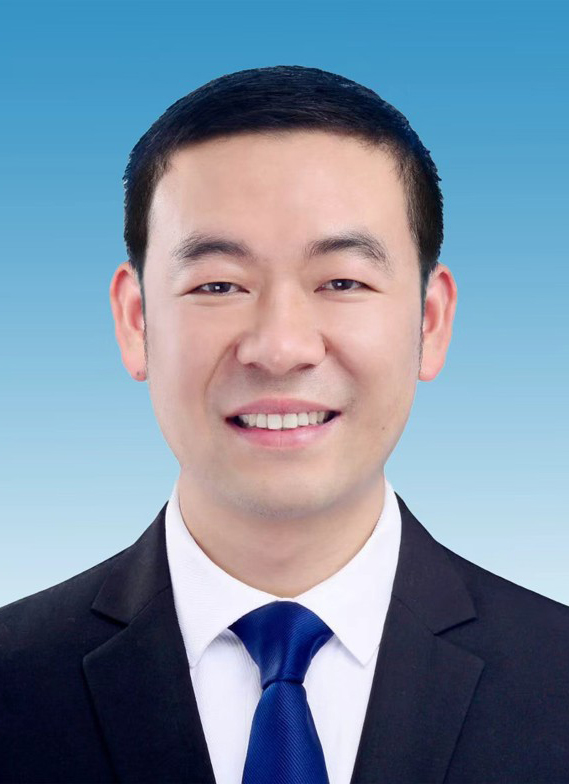
| Prof. Jie ZhouTsinghua University, China Jie Zhou received the B.S. and M.S. degrees from the Department of Mathematics, Nankai University, Tianjin, China, in 1990 and 1992, respectively, and the Ph.D. degree from the Institute of Pattern Recognition and Artificial Intelligence, Huazhong University of Science and Technology (HUST), Wuhan, China, in 1995. Since 1997, he has been a Post-Doctoral Fellow with the Department of Automation, Tsinghua University, Beijing, China. Since 2003, he has been a Full Professor with the Department of Automation, Tsinghua University. In recent years, he has authored more than 300 papers in peer-reviewed journals and conferences. Among them, more than 100 papers have been published in top journals and conferences, such as IEEE Transactions on Pattern Analysis and Machine Intelligence, IEEE Transactions on Image Processing, and CVPR. His research interests include computer vision, pattern recognition, and image processing. He is an IAPR Fellow. He is an Associate Editor of IEEE Transactions on Pattern Analysis and Machine Intelligence and two other journals. He received the National Outstanding Youth Foundation of China Award. |
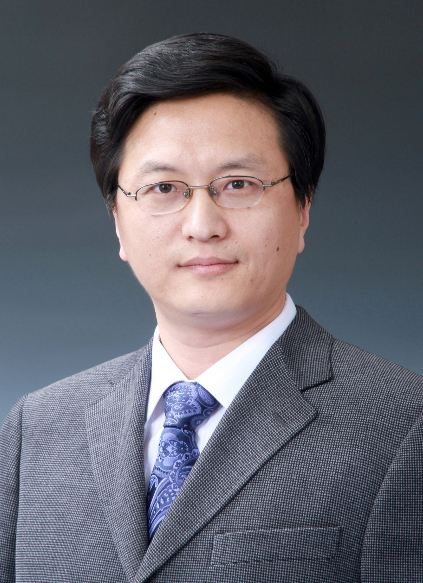
| Prof. Yong XuHarbin Institute of Technology (Shenzhen), China Dr. Xu Yong is currently a professor and doctoral supervisor at Harbin Institute of Technology (Shenzhen), Director of Shenzhen Key Laboratory for Visual Target Detection and Recognition, a Distinguished Professor of the "Changjiang Scholars" Program by the Ministry of Education, a recipient of the Guangdong Provincial "Special Support Talent Plan", a Shenzhen Pengcheng Scholar, and a Shenzhen National-level Leading Talent. His main research directions include pattern recognition, computer vision, visual large models, etc. He has made outstanding academic achievements in the field of artificial intelligence, being listed in the 2024 Global Top 0.05% Top Scientists list released by the international academic institution ScholarGPS; he has been consecutively selected as an Elsevier China High Cited Scholar for seven years, and ranked among the top 100 domestic and top 1,000 global computer scientists in the Global Top Computer Scientists Rankings released by Guide2Research. He has presided over multiple national and provincial-level projects, obtained more than 40 authorized invention patents, and won 8 provincial and ministerial-level scientific and technological awards/natural science awards/technology invention awards. His social appointments include Editor-in-Chief of the international academic journal International Journal of Image and Graphics, Founding Associate Editor of the flagship journal of the Chinese Association for Artificial Intelligence CAAI Transactions on Intelligence Technology, and Standing Committee Member of the Pattern Recognition Professional Committee of the Chinese Association for Artificial Intelligence. Speech Title: Automatic Diagnosis ofRetinopathy Abstract: To enhance the efficiency and accuracy of ophthalmic disease diagnosis and promote equitable access to medical resources, automated diagnosis of retinopathy is urgently needed to overcome the time and human resource constraints of manual diagnosis. That is, through advanced image analysis techniques, based on the precise identification of retinal image features and lesion analysis, efficient and accurate diagnosis of retinopathy can be accomplished. The lecturer focuses on three aspects of automated retinopathy diagnosis: grading of diabetic retinopathy, classification of multiple fundus diseases, and fundus image generation, and introduces high-precision and intelligent automated diagnostic techniques for retinopathy. |
| Prof. Tao LeiShaanxi University of Science & Technology, China Lei Tao is a professor and doctoral supervisor at Shaanxi University of Science and Technology. He is selected from the Shaanxi Provincial High level Talent Program, Shaanxi Provincial Outstanding Youth, Stanford Top 2% Global Scientists List, etc. He is a deputy editor, editorial board member, guest editor, etc. for 7 journals, and serves as conference chairman, technical committee chairman, publicity chairman, reward committee chairman, branch chairman, etc. in more than 20 international conferences. His main research areas are computer vision, machine learning, etc. At present, He has published over 100 papers in international journals and conferences such as Nature Communication, CVPR, ICCV, AAAI and IJCAI. Among them, 14 papers are ESI highly cited papers. His Google Academic Citation has exceeded 8400. He hosted many projects such as the National Natural Science Foundation of China, Shaanxi Provincial Outstanding Youth Fund, and Shaanxi Provincial Key Research and Development Program. He won the second prize of Shaanxi Province Science and Technology Award, the first prize of Gansu Province Higher Education Research Excellent Achievement Award, and the best paper of IEEE Transactions on Radiation and Plasma Medical Sciences as the first complete person. Speech Title: Medical Image Segmentation Using Uncertainty Estimation and Visual Foundational Models Abstract:Image segmentation is a key technology in the field of computer vision. At present, a large number of research results on image segmentation have been reported and used for many fields such as industry, agriculture, entertainment, and medicine. In this report, we focus on medical image segmentation using uncertainty estimation and visual foundational models. At present, the mainstream medical image segmentation methods face the following challenges. Firstly, accurate segmentation of medical images is difficult due to high noise and low contrast. Secondly, mainstream medical image segmentation models have a large number of parameters and slow inference speed, making it difficult to deploy on low-resource devices. Finally, pixel-level annotation of medical images is very expensive and requires professional knowledge. To address these problems, we have proposed some novelty medical image segmentation methods using uncertainty estimation and visual foundational models, and these methods show better performance than SOTA methods. |

| Prof. Jie GuiSoutheast University, China Jie Gui is currently the Professor in the School of Cyber Science and Engineering, Southeast University. He obtained his PhD degree in pattern recognition and intelligent systems from the University of Science and Technology of China, in 2010. He has worked as a postdoc research fellow at the University of Michigan. He has obtained the 2012 Endeavour Australia Cheung Kong Research Fellowship and worked in University of Technology, Sydney. His current research interests include machine learning, pattern recognition, data mining, image processing, and computer vision. He has published more than 70 papers in international journals and conferences such as IEEE TPAMI, IEEE TNNLS, IEEE TCYB, IEEE TIP, IEEE TCSVT, IEEE TSMCS, KDD, and ACM MM. He has obtained several honors and awards, such as Second Prize of Anhui Province Best Paper Award of Science, 2016, Endeavour Australia Cheung Kong Research Fellowships, 2012, and Guanghua Outstanding Graduate Research Award of the University of Science and Technology of China, 2009. He is currently a Senior Member of IEEE. He serves as the peer reviewer of many leading journals such as IEEE TPAMI, IEEE TNNLS, IEEE TCYB, IEEE TIP, IEEE TIFS, IEEE SMCS, PR, and ACM TKDD. He is the Area Chair, Senior PC member, or PC Member of many conferences such as NeurIPS and ICML. Speech Title: AI Security Abstract: 报告介绍课题组在人工智能安全方向的研究,涵盖对抗攻击与防御、生成式人工智能、图像复原与自监督学习等方面。针对水下图像与雾霾图像,我们提出多种图像增强算法并开展综述研究。在生成式AI方面,探索其在图像复原、视觉问答、文本生成与鉴伪中的应用,并进行理论与算法层面调研。我们还研究了图像增强模型的对抗鲁棒性,提出快速对抗训练的改进方法。在自监督学习方面,改进对比学习与掩码建模范式,提升语义理解能力。 |

| Prof. Chen GongNanjing University of Science and Technology, China Chen Gong is a full professor, and IET Fellow. He received his B.E. degree from East China University of Science and Technology (ECUST) in 2010, and dual doctoral degree from Shanghai Jiao Tong University (SJTU) and University of Technology Sydney (UTS) in 2016 and 2017, respectively. He has published more than 100 technical papers at prominent journals and conferences such as IEEE T-PAMI, IEEE T-NNLS, IEEE T-IP, IEEE T-CYB, ICML, NeurIPS, ICLR, CVPR, ICCV, ECCV, AAAI, IJCAI, ICDM, etc, and also holds 10+ granted inventory patents. He serves as the associate editor for IEEE T-PAMI, IEEE T-IP, IEEE T-CSVT, NN, NePL, FR and CJE, reviewer for more than 30 international journals such as AIJ, JMLR, IEEE T-PAMI, IJCV, IEEE T-NNLS, IEEE T-IP,IEEE T-KDE, and also the Area Chair/Senior PC member of several top-tier conferences such as ICML、ICLR、AAAI、IJCAI、ICDM、CIKM、ECML-PKDD, etc. He is the PI of Key Project and General Project of National Natural Science Foundation of China (NSFC). He received "CCF-IEEE CS Young Computer Scientist Award", "Wu Wen-Jun AI Excellent Youth Scholar Award", "Young Elite Scientists Sponsorship Program" of China Association for Science and Technology, the second prize of Natural Science Award of Chinese Institute of Electronics, the second prize of Natural Science Award of Shanghai City, "Hong Kong Scholar", and "Excellent Doctorial Dissertation award" by Shanghai Jiao Tong University (SJTU) and Chinese Association for Artificial Intelligence (CAAI). He was also selected to the Global Top Chinese Young Scholars in AI released by Baidu, and World's top 2% scientists list by Stanford University. |

| Prof. Yuling ChenGuizhou University, China Yuling Chen received the B.S. degree in mathematics and applied mathematics from Taishan University, Taian, China, in 2006, and the M.S. degree in applied mathematics and the Ph.D. degree in software engineering from Guizhou University, Guiyang, China, in 2009 and 2021, respectively. She is currently a Professor with the State Key Laboratory of Public Big Data, Guizhou University. Her recent research interests include federated learning, blockchain, cryptography, information safety, and artificial intelligence security. |

| Prof. Jianping GouSouthwest University, China Jianping Gou received the PhD degree in computer science from the University of Electronic Science and Technology of China, Chengdu, China, in 2012. He was a post-doctoral research fellow with the University of Sydney. He is currently a professor with the College of Computer and Information Science, Southwest University, Chongqing, China. His current research interests include pattern classification and machine learning. So far, he has published more than 160 papers on international journals or conferences, such as IJCV and CVPR. |

| Prof. Dawen XiaKaili University, China Dawen Xia received the Ph.D. degree from the College of Computer and Information Science & College of Software, Southwest University, Chongqing, China, in 2016. He is currently a Professor with the College of Microelectronics and Artificial Intelligence & College of Big Data Engineering & Engineering Research Center of Micro-nano and Intelligent Manufacturing, Ministry of Education, Kaili University, Kaili, China, and the College of Data Science and Information Engineering, Guizhou Minzu University, Guiyang, China. From 2019 to 2020, he was a Visiting Scholar supported by China Scholarship Council with the Department of Management Science and Information Systems, Rutgers, The State University of New Jersey, New Brunswick, NJ, USA. His research interests include Big Data analytics, artificial intelligence, and data mining. |